Students as Drivers of their Learning
My son is currently learning to drive and it is far more enjoyable than I imagined it would be! I am delighted to see him “in the driver’s seat”, finding the learning purposeful and focusing so intently on his goal. As educators, we want our students to be in the “driver’s seat” when it comes to their learning. As parents we also want our students to be “effective drivers”; that is, young people who “know how to successfully manage their engagement and drive their learning”. (source) We want this for young people not only so they can fully and actively participate in the learning process at school, but so they can develop the learning competencies they need for life.
This week I had the pleasure of speaking with Amy Berry who runs EngagEd Consulting. Amy Berry has developed the Engagement Continuum (see below) and works with schools to build understanding of the strategies that can move students (and staff) along the continuum.
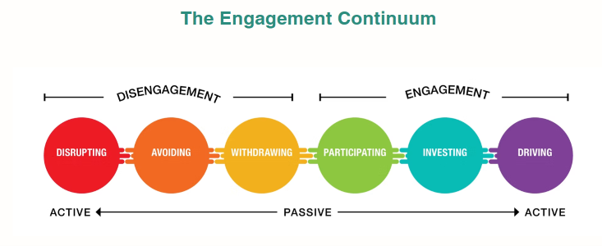
Over the last week I have watched students deeply engage in our school musical. They knew what they wanted to achieve as a team of students: an excellent school production that was inclusive, joyful and entertaining. And they achieved their goal. There is no doubt that at times some students in the production avoided rehearsals, withdrew a little bit as assessments took over, and sometimes were passively participating rather than actively investing in the production. However, the HVGS musical production of Mumma Mia had all the right ingredients to foster active engagement. There was a clear goal, the choice of musical was “just right” to allow for Junior and Senior School students to be involved, and the rigor of the rehearsal schedule meant ample opportunities for feedback and self-assessment in relation to their goals.
I could name a range of co-curricular experiences at HVGS - from aerobics and rugby to the Symphony Orchestra, Stage Band and Tournament of Minds, among many others - where active engagement is tangible and ever present. Likewise, I see that in our trip programme, most especially the Endeavour Programme in Years 10 and 11. Through Our Student Councils and student leadership positions HVGS students participate, invest and drive their learning.
Our goal at HVGS is to see equal levels of engagement within the classroom for all students. It might not be in every lesson, but it is imperative that students see their learning as purposeful and move beyond withdrawing and participating to truly investing and knowing how to drive their learning. What this looks like needs to be developmentally appropriate. As Amy Berry says, “passive disengagement is just as detrimental to learning and wellbeing as more active forms of disengaging”. We all know as teachers and parents the disruptors in classrooms who are at the extreme end of disengagement, and whose behaviours are visible and impactful. In the same way, we can spot the avoiders and with a little more work, spot the withdrawers.
However, we need to be concerned about the students who passively disengage “because it is often a blind spot for teachers and therefore the student does not attract the support and attention they may need to help them get engaged in learning.” These students might appear to be coasting along, perhaps doing ok in terms of their academic achievement (the number and letter grades on their reports and assessments). These students, though, are likely under achieving and the reasons for this need to be explored. At HVGS this is why feedback on students’ approaches to learning is equally important - perhaps even more important - than the grades on their reports. How students are approaching their learning - their capacity for critical and creative thinking, effective collaboration and communication, and their demonstration of curiosity – are the signs we need to investigate to better understand their level of engagement.
James Anderson has undertaken ground-breaking work on the concept of “learnership”. Anderson argues that in education we have increasingly focused on the craft of teaching at the expense of a deep focus and exploration of the craft of learnership across our school communities. Anderson has taken the work on growth mindset by Carol Dweck to develop a mindset continuum. On a continuum from fixed to high growth, Anderson identifies eight categories that are essential to learning and the behaviours and ways of thinking we would see in relation to these categories at different stages of the continuum. These eight categories are a learner’s
- view of the world and their place within it;
- approach to challenge;
- response to difficulties and obstacles;
- attitude towards effort and whether they see increased effort as key to mastery or a sign of failure;
- view of feedback and criticism: do learners see it as essential to growth or feel crippled and under attack as a result of feedback;
- attitude towards the success of others
- response to making mistakes; and
- willingness to embrace offers of help and support.
For students and adults to be at the high growth end of the continuum in these eight categories, they need to intentionally focus on the craft of learnership. This points to the crucial need for schools to focus on building resilience in students within and beyond the classroom. This needs to be alongside their capacity to think critically; approach feedback, challenges, setbacks and the success of others with curiosity; and to be open to collaborating and communicating with a diverse range of people.
It is by focusing on the craft of learning that we build active engagement in our classrooms. As an IB World School we have a mandate to do just this. At the centre of the each of the IB curriculum models (as seen below) is an image of the learner and the IB Learner Profile. The next layer of each model is approaches to teaching and learning. Regardless of the age of the child, the IB demands of schools a student-centred, holistic focus on learnership as well as the craft of teaching.
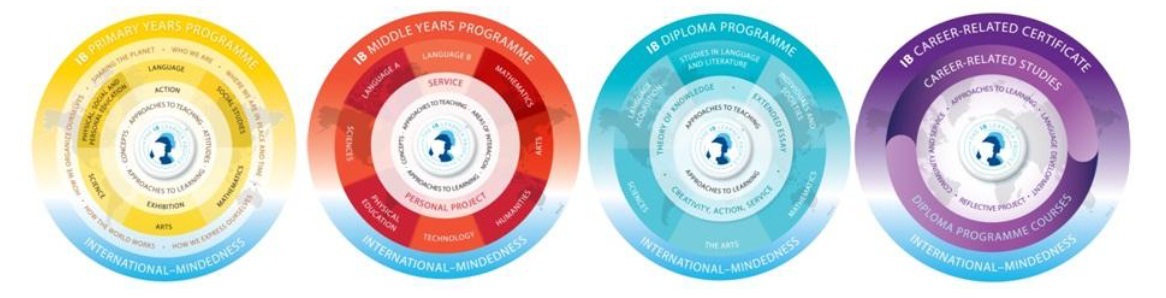
We all want our children to drive their engagement in learning. None of us want our children to disengage or be passive consumers and participants in the learning. The IB programmes are a key tool by which we can deepen learner engagement in our schools and prepare students for a world where they need to be lifelong learners who are constantly honing the craft of learnership.